
Three days is enough for a focused first taste of Scotland: a 3-day Scotland campervan itinerary can start in Glasgow, follow Loch Lomond and the Trossachs, then continue to Fort William. You may want longer to linger over walks and scenic stops, but this route gives you a clear plan without turning every moment into a dash.
You’ll see how to shape each day, where to leave room for unhurried stops and how to plan campsite stays rather than assume every scenic spot allows overnight camping. The guide also covers changeable weather, responsible travel and practical choices for enjoying the road from lochside views to the mountains around Fort William, so you can set off feeling prepared and still leave space to roam.
Key Takeaways
- Shape a three-day route from Glasgow via Loch Lomond and the Trossachs to Fort William, leaving breathing room for scenic stops.
- Plan your Loch Lomond visit around the area’s camping restrictions and arrange a suitable campsite for the night.
- Pack for changeable Scottish weather and take simple steps to reduce your impact outdoors.
- Make time near Fort William for mountain scenery, Steall Falls or Neptune’s Staircase, according to the pace you prefer.
Loch Lomond and the Trossachs
- Begin at Loch Lomond, where lochside scenery and wooded islands make a beautiful first stop. It’s described as the largest freshwater loch in Great Britain. For a higher viewpoint, include Conic Hill, which rises to 350 metres. Allow time to enjoy the landscape rather than treating the national park as a quick drive-through. During peak season, plan ahead and consider staying at a campsite.
- Add Falls of Falloch to your route as a waterfall stop. Pause to enjoy the water and surrounding scenery before continuing north. Check the facilities available at your planned overnight campsite, then shape the day around your preferred stops. This gives you a practical break between lochside views and the road towards Glencoe, without crowding every moment of your 3-day Scotland campervan itinerary.
- Make time for Glencoe and Loch Tulla viewpoint as you travel towards Fort William. Stop at the viewpoint to take in the landscape and break up the drive. The route brings together lochs, mountain scenery and open views, so allow time for scenic stops that catch your eye. If you’re travelling as a couple, agree on the day’s must-see places before setting off.
- Continue to Fort Augustus for a Loch Ness cruise and time beside the loch. A newspaper article about the Loch Ness Monster legend appeared in 1933, giving the story a firm place in the area’s modern history. Treat the cruise and village as part of your northern route, rather than squeezing in extra detours. Loch Ness and Fort Augustus offer a different feel from Loch Lomond, rounding out a journey of varied Scottish landscapes.
Three-day campervan route from Glasgow through Loch Lomond and the Trossachs
- Choose Glasgow for a three-day route focused on Loch Lomond and the west. Edinburgh also works: the suggested drive via Stirling to Loch Lomond and The Trossachs National Park takes 2 hours. Pick up your campervan and set off west if you want more time beside the loch.
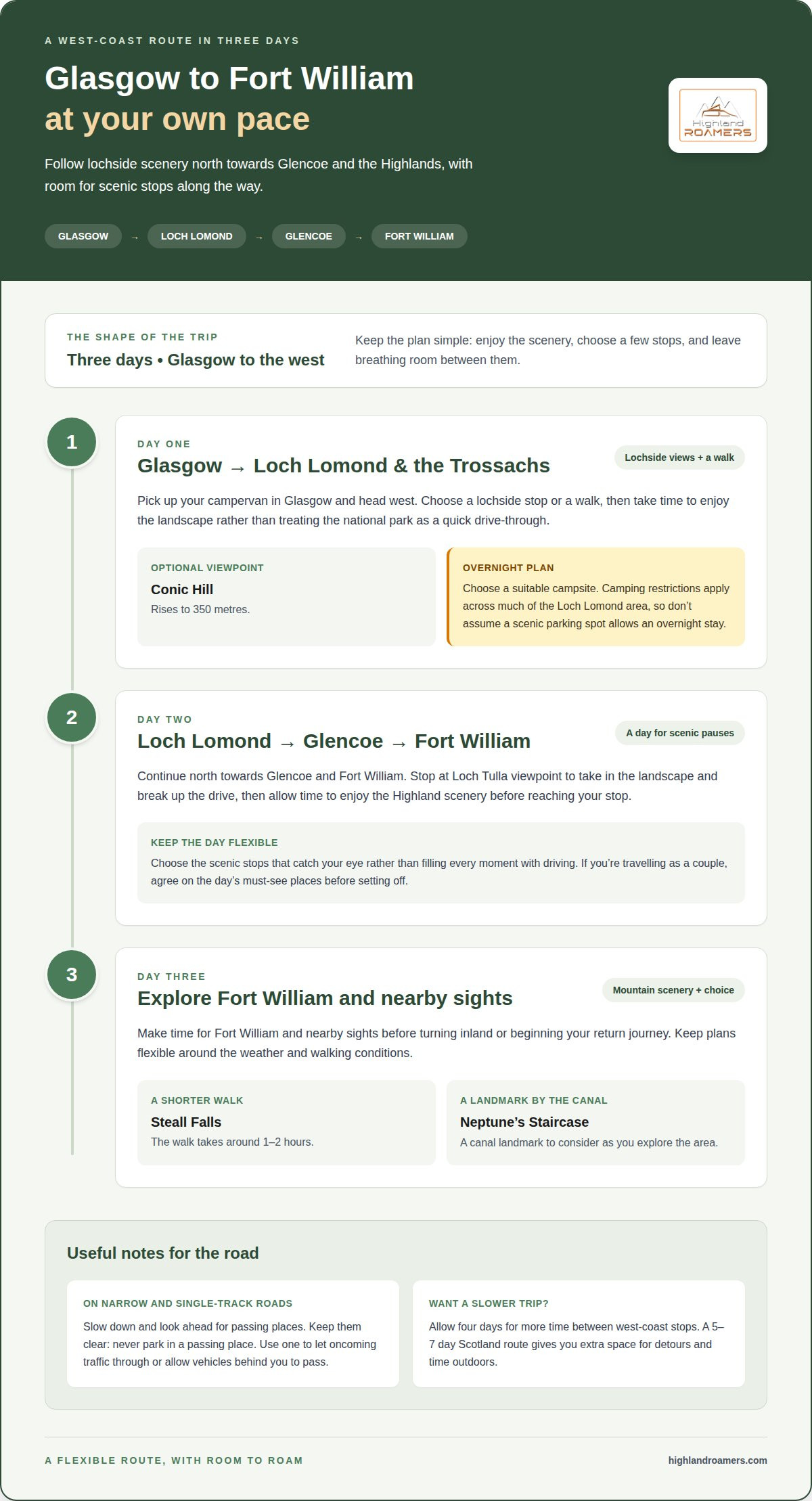
- On day one, drive from Glasgow to Loch Lomond and the Trossachs. Keep the plan flexible, choosing a lochside stop or a walk before continuing to your overnight campsite. The scenery changes quickly, so leave room for breaks instead of filling the day with driving.
- On day two, continue north towards Glencoe and Fort William. Pause at Loch Tulla viewpoint, then take time to enjoy the Highland landscape before reaching your stop. On day three, visit Fort William and nearby sights before turning inland or beginning your return journey. This route keeps the west coast at the centre of the trip.
- On narrow and single-track roads, slow down and look ahead for passing places. Use one to let oncoming traffic through or allow vehicles behind you to pass. Never park in a passing place; keep it clear so traffic can pass safely. Take extra care on unfamiliar roads or when visibility is limited.
- Allow four days for a west coast campervan route if you want more time between stops. A 5-7 day Scotland route gives you extra space for detours and time outdoors. For a broader Scottish Highlands road trip, choose a route that includes the places you most want to see, then group nearby stops to avoid backtracking.
- Keep the three-day plan simple: Glasgow, Loch Lomond, Glencoe and Fort William. If you’re ready to plan the vehicle side of your journey, explore campervan rental alongside your route and preferred dates.
Weather preparation and responsible camping
Plan for changeable weather, suitable overnight stops and low-impact visits to Scotland’s mountains. Around Loch Lomond, Glencoe and Oban, conditions and campsite plans can shape each day, so allow flexibility in your schedule.
Book your campervan and campsites ahead, especially during peak season. Reserve the Oban-to-Mull ferry in advance, as crossings can fill quickly. Plan attraction visits around your route, since arrangements vary by stop.
For this three-day route, choose established campsites for overnight stays, particularly around Loch Lomond during peak season. Camping restrictions apply across much of the area, so don’t assume a scenic parking spot permits overnight camping.
-
Prepare for the weather
Pack layers and clothing for wet, windy and cool conditions, even if the day starts clear. Scottish weather can change quickly, so keep waterproofs accessible rather than buried beneath luggage. From May through September, take midge repellent and a headnet for time outdoors. Before walking in Glencoe, consider how conditions may affect your planned route and be ready to adjust the day.
-
Follow wild-camping safety and etiquette
Choose a suitable place to camp and respect the landscape, nearby communities and other visitors. Wild camping on foot is different from sleeping in a campervan: don’t assume a beach, roadside lay-by or parking area permits overnight vehicle stays. Keep noise low, take all rubbish with you and leave no trace. At Durness, enjoy the beaches during the day and stay overnight at a suitable campsite.
-
Choose overnight sites and campsites
Plan your night around the next day’s route, and reserve campsite pitches ahead in peak season. Around Loch Lomond, use a campsite because camping bans cover much of the area; near Glencoe, a campsite gives you a practical base for walks. In Oban, the Seafood Hut is open daily from 10am to 6pm, making it a useful stop before settling in for the night. Durness is a northern detour, not a nearby stop on this short route.
Fort William and Neptune’s Staircase
- Drive to Fort William with time for a scenic pause along the way. The town is a useful base for exploring nearby sights, from mountain viewpoints to canal landmarks. Ben Nevis, the UK’s highest peak, dominates the landscape, making this a striking stretch of the Scottish Highlands whether you’re walking or simply enjoying the views. Keep your plans flexible around the weather and walking conditions.
- Choose an outdoor activity that suits your group and the day’s conditions. The walk to Steall Falls near Fort William takes around 1-2 hours, making it a shorter option than a full mountain hike. Allow time for the walk itself, rather than fitting it between several driving stops. For a more demanding day, Ben Nevis is an iconic objective, but don’t treat reaching its summit as essential to enjoying the area.
- Visit Neptune’s Staircase at Banavie, 4 miles from Fort William. This canal landmark raises the waterway by 19 metres over a quarter of a mile. Watch the locks at work and take in the scale of the engineering beside the Caledonian Canal. It’s an absolutely worthwhile stop for a curious tourist, and a change of pace after taking in mountain scenery. Leave room in your day to enjoy the site without rushing back onto the road.
- Link Fort William with Glenfinnan or continue towards Fort Augustus, depending on your route. The suggested drive from Glenfinnan to Fort Augustus takes about 1 hour, so plan your stops around that leg. You could make Fort William your final destination on a three-day trip, or extend the road trip north. For a campervan journey shaped around these Highland places, plan your campervan adventure.
Highland Roamers: Campervan rental
Highland Roamers’ campervan rental gives you a base for your Glasgow-to-Fort William route. Once you’ve chosen your stops and campsite plans, select a van that suits your needs between days out. Adventure accessories can tailor the trip to your plans, while a Bedding Pack is a practical option for overnight stays. Paddleboard Hire adds time on the water to your Scottish road trip.
Choose extras that suit your itinerary rather than packing for activities you haven’t planned. Whether you’re travelling as a couple, with family or with friends, shape the journey around your own pace and interests.
Contact Highland Roamers to talk through your campervan trip.
Make the route your own
Your 3-day Scotland campervan itinerary is a starting point, not a timetable to follow at all costs. Before you set off, choose what matters most to your group: more time outdoors, quieter scenic stops or an easy pace between overnight stays. That choice can help you decide which detours to leave for another trip.
Leave room to adapt. If the weather changes your plans or a place captures your attention, let the day take a different shape. Highland Roamers’ team brings local knowledge of Scottish adventure destinations to help you make the most of your planned journey.
When you’re ready to turn your ideas into a trip, contact Highland Roamers to plan your trip. Choose when you’d like to roam, then look forward to discovering Scotland at your own pace.
Frequently Asked Questions
How long do you need to spend in Scotland?
Three days suits a focused trip; a longer visit gives you more time to explore different parts of Scotland without packing each day with stops. Decide how much time you want for walking, sightseeing and relaxed meals, then choose your route accordingly. With a week or more, add destinations rather than trying to fit distant places into a short break.
Is vanlife safe in Scotland?
Good preparation can help you feel more secure on a campervan trip. Keep valuables out of sight, lock the doors when you leave the vehicle and save important contact details somewhere accessible. For outdoor activities, tell someone your plans and carry suitable clothing and essential supplies. If you’re travelling with children or a dog, agree on a simple meeting point before exploring busy visitor sites.
When is the best time of year to visit Scotland?
The best season depends on what you want from the trip. Consider your planned activities, preferred amount of daylight and whether you’d enjoy a quieter or busier visitor season. For walking-focused days, think about how much time you want to spend outdoors. For a scenic road trip, choose dates that suit your pace and leave room for indoor stops.
Where do you fill up water in Scotland?
Look for designated taps at campsites and touring-vehicle facilities, and plan refills around your overnight stops. The Ice Factor in Kinlochleven has a water tap and paid showers. Keep drinking water in a refillable container for the day, especially if you plan to walk away from the vehicle. Don’t rely on finding a tap at every roadside stop.
What is a good 3-day Scotland campervan itinerary for first-time visitors?
For an inland alternative, plan three days around Loch Lomond, the Scottish Crannog Centre and Stirling Castle. Spend the first day at the loch, then travel towards Killin and the Crannog Centre on day two. Save Stirling Castle for the final day and keep the rest of the day open for your onward journey. This gives each stop room to breathe.
How long are the driving distances and times between stops on a 3-day Scotland road trip?
Driving times depend on your route, traffic and how often you stop. As an example beyond the Loch Lomond route, the drive from Glasgow to Oban takes about two hours. Treat this as a guide for that journey, not a guarantee for other roads. Plan fewer stops on longer driving days and leave time to pause for food or views.