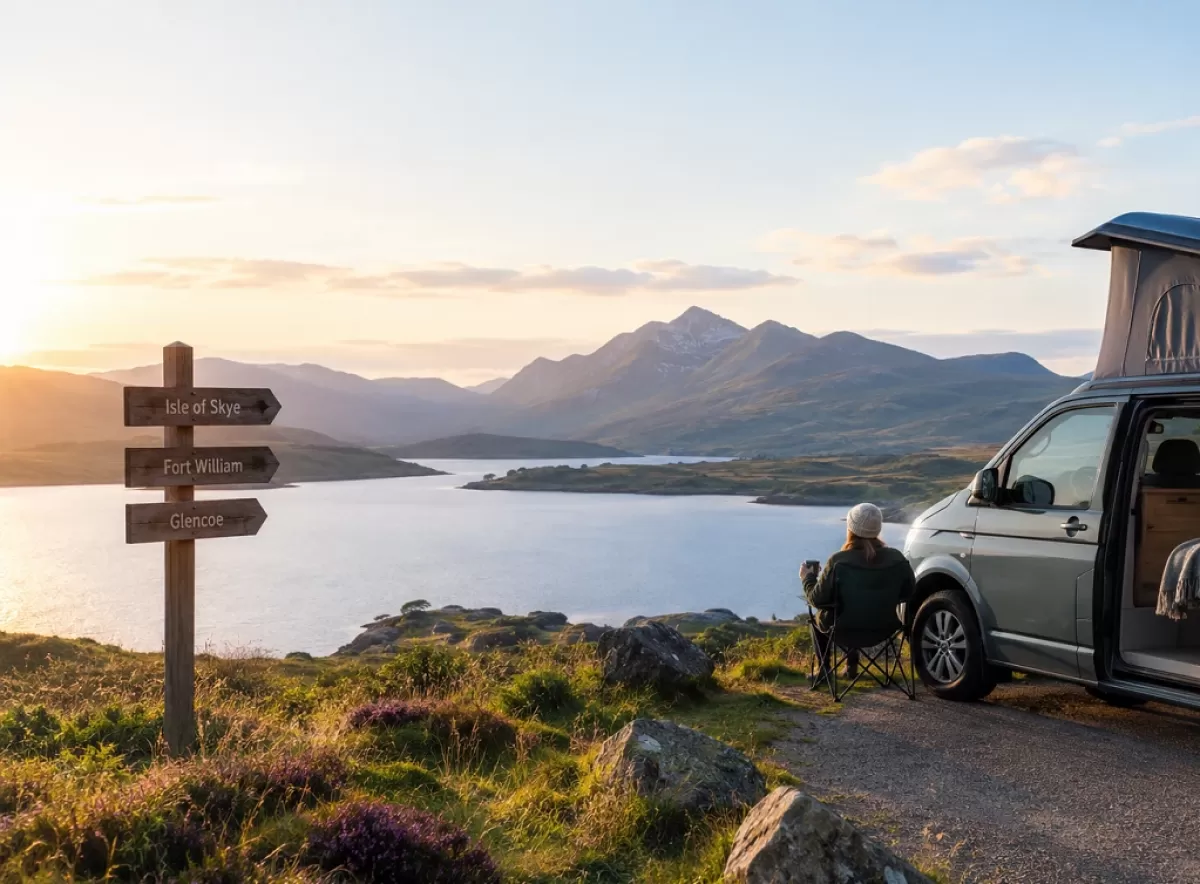
Scotland in December offers a different kind of road trip. Festive city streets, dramatic Highland landscapes, quiet lochside stops and cosy places to eat make it an appealing destination for travellers who enjoy exploring at a slower pace. However, shorter days, cold weather and seasonal closures mean that a little planning goes a long way.
If you are considering a winter trip, the best approach is to choose a manageable route, check which attractions and campsites are open, and leave room for changes in the weather. A campervan can offer flexibility between destinations, provided the vehicle, overnight stops and route are suitable for winter travel.
This guide covers the best things to do in Scotland in December, places to consider for a winter road trip and practical advice for travelling around the Highlands.
Is Scotland Worth Visiting in December?
Yes, Scotland can be a rewarding destination in December if you enjoy festive events, historic towns, winter scenery and quieter outdoor experiences. Edinburgh and Glasgow offer seasonal attractions and indoor activities, while parts of the Highlands provide striking views of mountains and lochs.
Winter does bring some limitations. Daylight is short, rain and strong winds are possible, and snow is more likely on higher ground than in many towns and cities. Some rural businesses, campsites and attractions also reduce their opening hours or close for the season.
For a campervan holiday, December works best when you plan fewer stops and allow enough time to reach each destination in daylight. Rather than attempting a long route around the whole country, consider exploring one area properly and keeping alternative plans for poor weather.
Best Things to Do in Scotland in December
1. Explore Edinburgh’s Christmas Attractions
Edinburgh is an excellent starting point for a December visit, particularly if you want to combine sightseeing with festive events. The Old Town, historic architecture, independent shops and cafés offer plenty to explore between seasonal activities.
You could spend part of the day around the Royal Mile, visit Edinburgh Castle or browse the city’s museums before enjoying dinner in the evening. Christmas markets and festive entertainment may also be available, depending on your travel dates.
If you are travelling by campervan, consider arranging an overnight stop outside the busiest central areas and using public transport to explore the city. Check parking restrictions, access arrangements and seasonal event dates before you travel.
2. Discover Glasgow’s Culture and Winter Events
Glasgow is worth including if you enjoy a mixture of architecture, shopping, museums and food. Kelvingrove Art Gallery and Museum is one option for a colder or rainy day, while the city centre offers places to eat and browse local shops.
December’s seasonal events can add to the atmosphere, but opening times vary around Christmas and New Year. Check the details of any event before building it into your itinerary.
For a road trip, Glasgow can work as a city stop before heading towards Loch Lomond or other destinations in western Scotland. Allow time for city traffic and plan your parking before arriving.
3. Take a Scenic Drive Through Glencoe
Glencoe is one of the most recognisable landscapes in the Scottish Highlands, with steep mountain slopes, open glens and dramatic views. In December, low winter light can make the scenery particularly atmospheric, and snow may appear on the surrounding peaks when conditions allow.
For a winter campervan trip, focus on accessible viewpoints and short stops rather than trying to cover too much ground. A scenic drive can be enjoyable without committing to a long hike.
Check the forecast and road conditions before setting off. Ice, snow, strong winds and poor visibility can affect travel, and rural roads may be more challenging after dark. Choose stops with safe parking and avoid stopping where your vehicle could obstruct traffic.
4. Explore Fort William and the Surrounding Highlands
Fort William provides a useful base for exploring part of the western Highlands. Depending on the weather and seasonal opening arrangements, you could combine a visit to the town with nearby viewpoints, short walks or a scenic drive.
Ben Nevis dominates the surrounding landscape, but winter mountain conditions require serious preparation. A December visit does not mean that the summit is a suitable walking objective for an ordinary sightseeing trip. If you are not experienced in winter mountaineering, choose lower-level routes and established viewpoints instead.
If you plan to stay overnight in the area, confirm campsite availability and facilities in advance. Do not assume that summer services will remain open throughout winter.
5. Enjoy Lochside Views Around Loch Lomond
Loch Lomond and the surrounding national park offer opportunities for short walks, photography and peaceful stops beside the water. Winter can bring changing skies and beautiful views, although rain, muddy paths and icy surfaces are possible.
Choose a walk that suits the weather and your experience, and check local parking rules before stopping. If conditions deteriorate, a nearby village or indoor attraction can provide an alternative to spending the day outdoors.
For campervan travellers, this area can be a practical part of a shorter itinerary, provided your overnight arrangements are confirmed and you leave enough time for daylight driving.
6. Visit a Winter Attraction or Local Market
Not every day in Scotland needs to revolve around outdoor activities. Castles, museums, galleries and local markets can provide a useful balance when the weather is unsettled.
Historic attractions around Stirling and other Scottish towns are worth researching, while seasonal markets and festive events may be available in December. Always check opening hours, ticket requirements and Christmas closures before travelling.
If you are moving between destinations in a campervan, choosing one main attraction per day can make the journey easier to manage. It also leaves time for an unplanned scenic stop or a change of route if the weather turns.
7. Look for Winter Wildlife and Dark Skies
Scotland’s quieter winter landscapes can appeal to travellers who enjoy nature. Depending on the location, weather and time of day, you may spot wildlife or find a good place for stargazing away from bright city lights.
The Cairngorms region is worth researching for winter scenery and wildlife experiences. However, remote locations can be cold and exposed, and cloudy weather may prevent clear views of the night sky.
Choose accessible locations, check local guidance and avoid driving unfamiliar rural roads late at night simply to find a darker viewing spot. Treat wildlife sightings and clear skies as a bonus rather than something guaranteed.
Planning a Campervan Road Trip in Scotland in December
A campervan gives you the option to explore different parts of Scotland without changing accommodation every night. However, winter travel requires more preparation than a summer road trip.
Before booking, confirm that the hire company operates during your chosen dates and that the specific vehicle is suitable for the conditions you expect. Ask about heating, insulation, overnight facilities and any winter-use restrictions.
Check Winter Campervan Availability
Not every campervan hire company offers vehicles throughout December. Availability, vehicle specifications and winter arrangements can differ, so confirm these details directly before finalising your trip.
If heating is available, ask how it operates and what fuel or power it requires. Also check what facilities are included in the vehicle and whether you need to bring additional bedding or equipment.
For Highland Roamers customers, confirm the availability and suitability of the chosen campervan for your dates before planning a winter itinerary around it.
Book Suitable Overnight Stops
Do not assume that a campsite operating in summer will be open in December. Check opening dates, toilet and shower facilities, electricity availability, access arrangements and booking requirements.
Plan your overnight stops before setting off, particularly if you intend to explore rural Highland areas. An alternative stop is useful if bad weather makes your original route impractical.
Follow local parking and overnight-stay rules rather than assuming you can park anywhere for the night. A confirmed place to stay makes it easier to focus on the journey itself.
Plan Around Short Daylight Hours
Daylight is one of the biggest factors to consider when driving in Scotland in December. Sunrise and sunset times vary by location, but the days are short, especially around the winter solstice.
Aim to complete unfamiliar or challenging stretches of driving during daylight. Avoid planning several distant attractions in one day, and leave enough time for breaks, fuel stops and unexpected delays.
A slower itinerary often works better than trying to follow a summer route at the same pace. Spending two nights in one area can give you more flexibility if weather conditions affect your plans.
Choose a Manageable Winter Route
For a first winter campervan trip, consider a route around a smaller area rather than attempting to cover the whole Highlands.
For example, you could plan a trip that includes Loch Lomond, Glencoe and Fort William, adjusting the number of stops to suit your available time and current road conditions. These destinations offer a mixture of scenery, towns and opportunities for short outdoor visits.
The North Coast 500 requires additional consideration in winter because of its length, remote stretches and reliance on rural services. Some accommodation providers and businesses may close seasonally, while snow, ice or poor visibility can affect driving. Research the route carefully before deciding whether it is suitable for your dates and experience.
What Is the Weather Like in Scotland in December?
December is generally one of Scotland’s coldest months, with average winter maximum temperatures around 6°C. Conditions vary between regions, and higher ground can be much colder. Rain, frost, strong winds and occasional snow are all possible.
Snow is not guaranteed across the country. You may see snow on Highland peaks while lower-lying areas experience rain or cold, windy conditions instead. Check a local forecast for each part of your route rather than relying on one national prediction.
How Much Daylight Will You Get?
Scotland has its shortest days around the winter solstice in December. This affects how much driving, sightseeing and walking you can comfortably fit into a day.
Check local sunrise and sunset times when planning your route. Try to schedule outdoor stops and scenic drives during daylight, leaving indoor attractions, meals and relaxing at your overnight stop for the darker hours.
What Should You Pack?
Pack for wet, cold and changeable weather rather than relying on a single heavy coat.
Useful items include:
- A waterproof and windproof jacket
- Warm layers, including thermal base layers if needed
- Waterproof walking boots with good grip
- Warm socks, a hat and gloves
- Waterproof trousers for outdoor activities
- Spare clothing and a small day bag
- A torch and a fully charged phone
- Food, water and a portable phone charger
If you are hiring a campervan, check what bedding, cooking equipment and other essentials are included. Do not assume every vehicle has the same facilities.
Winter Driving Tips for the Scottish Highlands
Winter roads can be challenging, especially on rural routes and in exposed areas. Prepare for the conditions rather than assuming that a road will remain clear because it is a familiar tourist route.
Check road and weather updates. Consult the Met Office forecast and Traffic Scotland before setting off, particularly if snow, ice, heavy rain or strong winds are expected.
Allow extra time. Drive at a speed appropriate for the conditions and leave enough space between your vehicle and the one ahead.
Be careful on single-track roads. Use passing places correctly, never park in them and take extra care when visibility is poor.
Keep essentials accessible. Carry warm clothing, food, water and a charged phone in case your journey takes longer than expected.
Be prepared to change plans. If a route becomes unsafe or travel is discouraged during severe weather, delay your journey or choose another destination.
Frequently Asked Questions About Scotland in December
Is December a good time to visit Scotland?
Yes, if you enjoy festive attractions, winter scenery and quieter sightseeing. Short daylight hours, cold weather and seasonal closures mean you should plan your route and activities carefully.
Does it snow in Scotland in December?
Snow is possible, particularly on higher ground in the Highlands, but it is not guaranteed. Cities and lower-lying areas may experience rain, frost or strong winds instead.
Can you hire a campervan in Scotland in December?
Some hire companies may offer winter bookings, but availability and vehicle facilities vary. Confirm the dates, heating arrangements and winter-use requirements directly with your chosen provider before booking.
Are campsites open in Scotland in December?
Some remain open, while others close or reduce their facilities for winter. Check opening dates, overnight facilities and booking requirements before planning your route.
Is the North Coast 500 suitable for a December campervan trip?
It can be challenging because of short daylight hours, remote roads and seasonal closures. Research road conditions, overnight stops and available services carefully, and be prepared to change your plans.
What should I wear when visiting Scotland in December?
Wear warm layers, a waterproof outer jacket and footwear with good grip. Add a hat and gloves for outdoor activities, and pack spare clothing in case you get wet.
Plan Your Scottish Campervan Adventure
Scotland in December can be a memorable time to explore, from festive city breaks to dramatic Highland scenery. The key is to choose a realistic route, check seasonal opening times and give yourself enough flexibility to adapt to winter conditions.
If you are planning to explore Scotland by campervan, start by checking vehicle availability and facilities, then build your itinerary around confirmed overnight stops and manageable driving days.
Explore the Highland Roamers campervans and use the company’s route inspiration to help plan your journey. With the right preparation, you can enjoy Scotland’s winter landscapes without trying to fit too much into each day.