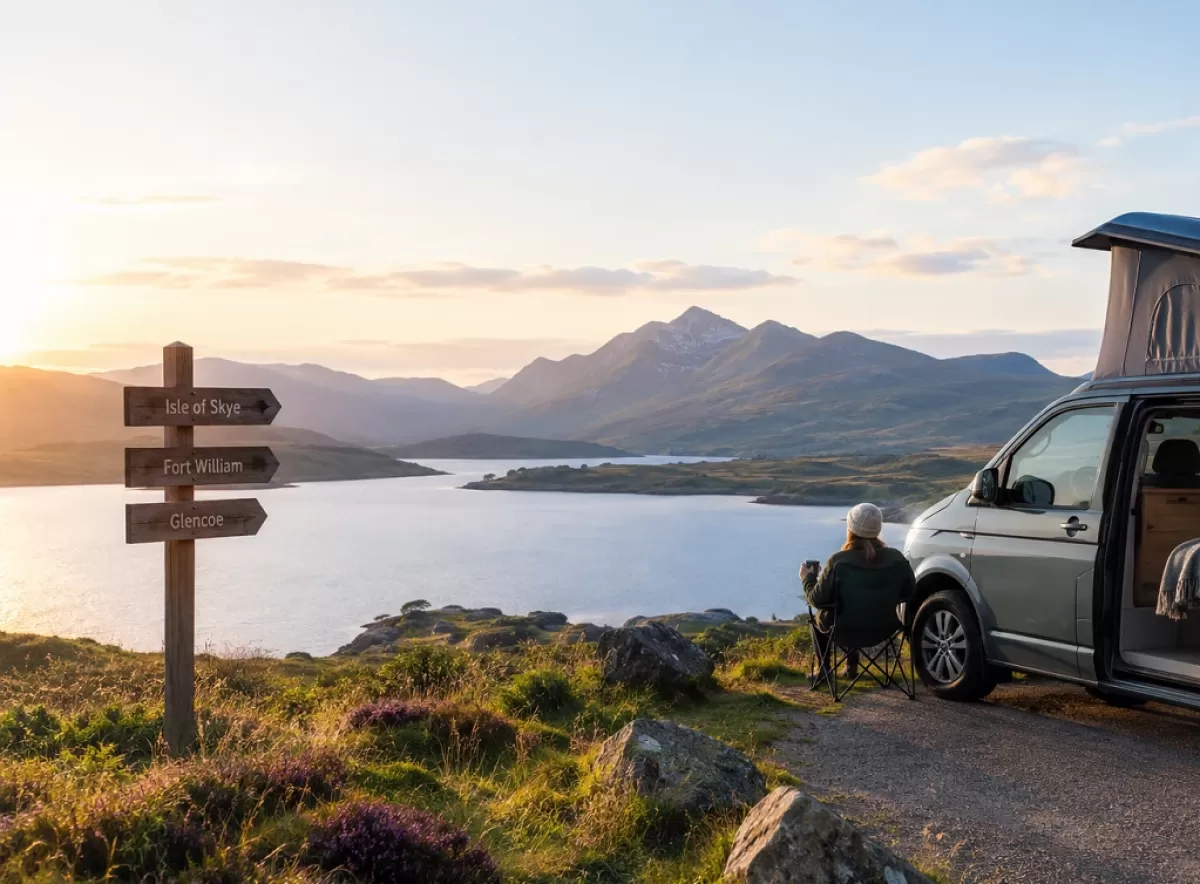
Scotland is worth visiting throughout the year, but the best time depends on what you want from your trip. May, June and September are often good months to visit Scotland because they can offer a balance of daylight, outdoor activities and manageable crowds compared with the busiest summer weeks. July and August are popular for warmer weather and school-holiday trips, while autumn and winter suit travellers looking for quieter landscapes and seasonal experiences.
If you’re planning a campervan holiday, the time of year also affects driving conditions, campsite availability, daylight hours and how much you can comfortably explore each day.
This guide explains what each month offers so you can choose the right time for your Scottish adventure.
When Is the Best Time to Visit Scotland?
For many travellers, May, June and September are among the best months to visit Scotland.
- May: Longer days, spring landscapes and opportunities to explore before the main summer rush.
- June: Very long daylight hours and plenty of time for scenic drives, walking and sightseeing.
- July and August: Popular months for summer holidays, festivals and outdoor activities, but accommodation and campsites can be busier.
- September: An appealing option for quieter roads, early autumn colours and outdoor exploration.
- October to April: Better suited to travellers who enjoy changing seasons, dramatic scenery and quieter destinations, provided they plan around shorter days and weather conditions.
Scotland’s weather can change quickly in any season. Your preferred activities, budget and travel style matter just as much as the month you choose.
Best Time to Visit Scotland Month by Month
January: A Quiet Winter Escape
January is one of Scotland’s coldest months, with short daylight hours and the possibility of snow, ice and strong winds, particularly in higher areas.
It’s a good choice for travellers interested in winter landscapes, cosy towns and a slower-paced break. However, some seasonal attractions and campsites may have reduced opening hours or close for winter.
Campervan tip: Check winter opening arrangements, heating facilities and road conditions before travelling. Keep your daily driving plans flexible and allow extra time in poor weather.
February: Winter Scenery and Peaceful Days
February remains firmly in the winter season. Snow may appear in the Highlands, while lower areas can experience rain, frost and changeable conditions.
The quieter atmosphere can appeal to travellers who prefer exploring without the summer crowds. Daylight gradually increases, but there is still less time for long scenic drives than in late spring and summer.
Campervan tip: Confirm which campsites and facilities are open. Plan shorter routes and avoid relying on remote overnight stops without checking access and local rules.
March: The Start of Spring
March brings gradually longer days and the first signs of spring. The weather remains unpredictable, so sunshine can quickly give way to rain, wind or cold temperatures.
This month may suit travellers looking for a quieter trip before the busier season. Some Highland routes and mountain areas can still have winter conditions.
Campervan tip: Pack waterproof clothing and warm layers. Check mountain weather and road updates before heading towards remote locations.
April: Spring Landscapes and Longer Days
April offers more daylight and the chance to see Scotland’s landscapes change as spring develops. It can be a rewarding month for countryside walks, lochside stops and exploring towns.
Conditions vary across the country, and higher ground may still experience cold weather. Easter holidays can also increase demand at popular destinations, depending on the dates.
Campervan tip: Book ahead if travelling during school holidays, and check seasonal campsite opening dates before finalising your route.
May: A Strong Choice for Outdoor Exploring
May is often one of the most appealing months to visit Scotland. Days are longer, spring growth adds colour to the landscape, and outdoor activities become easier to plan.
It’s a useful time for exploring the Scottish Highlands, visiting lochs and taking scenic drives before the busiest summer period. However, popular locations can still become busy, particularly around bank holidays.
Midges can begin appearing as the weather warms, especially in damp areas and parts of the west.
Campervan tip: May can work well for a flexible road trip. Reserve popular campsites in advance, but leave room in your itinerary for spontaneous stops and weather changes.
June: Long Days for Scenic Road Trips
June offers some of the longest daylight hours of the year. This gives visitors more time to explore villages, walk scenic trails and enjoy Scotland’s landscapes without rushing back before sunset.
It’s a particularly attractive month for campervan travel because longer days make it easier to combine driving with outdoor activities. Demand can increase as the summer holiday season approaches.
Midges may also be active in suitable weather, particularly around still, damp areas.
Campervan tip: Plan your main driving earlier in the day and use the extra daylight for walks and sightseeing. Carry insect repellent if you’re visiting midge-prone areas.
July: Peak Summer Travel
July is a popular month for visiting Scotland, particularly for families and travellers planning longer summer holidays. The days remain long, and many outdoor attractions and seasonal facilities are operating.
The trade-off is higher demand at popular destinations. Campsites, accommodation and some tourist attractions can book up well in advance. Weather remains variable despite the summer season.
Campervan tip: Book your campervan and overnight stops early. Plan popular destinations ahead of time, and allow flexibility in case weather or traffic affects your schedule.
August: Festivals, Activities and Busy Destinations
August brings summer events, festivals and busy visitor areas. It’s a good option for travellers who enjoy an active atmosphere and want to combine sightseeing with cultural experiences.
However, demand can be high, especially during school holidays and major events. Midges may also be a nuisance in parts of the Highlands and west coast.
Campervan tip: Arrange overnight stops in advance and check local parking and overnight camping rules. Avoid assuming you can stay overnight wherever you park.
September: A Good Balance for Many Travellers
September is often a strong choice for people who want to explore Scotland after the main summer rush. Days are shorter than in June and July, but there is still time for scenic drives and outdoor activities.
Early autumn can bring attractive colours to woodland and Highland landscapes. Temperatures can vary, and rain is always possible, so September shouldn’t be treated as a guarantee of dry weather.
Campervan tip: Consider a route through the Highlands with time for walking, photography and relaxed stops. Check campsite availability and closing dates, especially towards the end of the month.
October: Autumn Colours and Dramatic Landscapes
October brings deeper autumn colours to many areas, cooler temperatures and shorter days. It’s a good month for photography, countryside walks and exploring quieter destinations.
Rain and wind can affect travel plans, and daylight becomes more limited as the month progresses. Some seasonal campsites and attractions may begin closing or reducing their services.
Campervan tip: Build shorter driving days into your plan, check opening dates and pack layers for cold, wet conditions.
November: A Quieter Time to Explore
November is generally cold, dark and changeable. It can suit travellers who prefer peaceful towns, dramatic landscapes and indoor attractions rather than long outdoor days.
Some remote facilities may be closed, and poor weather can make rural driving more demanding. The experience depends heavily on your route and willingness to adapt.
Campervan tip: Check heating, campsite facilities and winter driving requirements before departure. Choose overnight stops carefully and avoid planning too many activities into a short day.
December: Winter Atmosphere and Festive Breaks
December offers festive events, decorated towns and the possibility of snow in some parts of Scotland. It can be an appealing time for a short winter getaway, although daylight is limited and conditions may be challenging.
Christmas and New Year can bring increased demand in some destinations, while other locations operate on reduced winter schedules.
Campervan tip: Confirm holiday opening hours, overnight facilities and road conditions. Make sure your campervan is suitable for cold weather and plan a safe place to stay each night.
Which Month Is Best for a Scotland Campervan Trip?
The best month depends on what you want from the journey.
| Your priority | Months to consider | Why |
| Spring scenery and outdoor walks | April–May | Spring landscapes and increasing daylight |
| Long days for scenic drives | June–July | Extended daylight gives you more time to explore |
| Summer holidays and festivals | July–August | A lively seasonal atmosphere and many activities |
| A balance of scenery and quieter travel | May or September | Potentially less busy than peak summer, depending on location and dates |
| Autumn colours | September–October | Seasonal changes across woodland and countryside |
| Winter landscapes and quiet towns | December–February | A different atmosphere, with more weather and daylight planning needed |
These are general seasonal suggestions rather than guarantees. Conditions, visitor numbers and prices vary by location and year.
What Is the Cheapest Time to Visit Scotland?
The cheapest time to visit Scotland depends on where you go, when you travel and how far in advance you book.
Winter and some shoulder-season dates may offer lower prices than peak summer, but not every campsite, attraction or rental company follows the same pricing pattern. School holidays, festivals and special events can also affect costs.
To manage your budget:
- Compare campervan rental prices across several dates.
- Check whether mileage, insurance, bedding and additional equipment are included.
- Compare campsite fees and facilities before choosing overnight stops.
- Travel outside school holidays where possible.
- Plan a route that avoids unnecessary long-distance driving.
- Check seasonal closures before booking non-refundable accommodation or activities.
A lower rental price does not always mean a cheaper trip overall. Fuel, overnight stops, food, activities and travel distance all contribute to the total cost.
What Should You Consider Before Booking a Campervan?
Choosing the right month is only one part of planning a campervan holiday in Scotland. Consider these practical points before you book.
Daylight hours: Summer gives you more time to explore, while winter requires shorter, more carefully planned driving days.
Weather: Pack for rain, wind and changing temperatures even if you travel during summer.
Campsite availability: Check opening dates and reserve popular sites in advance during busy periods.
Driving routes: Some Highland roads are narrow, winding or single-track. Allow time for passing places, slower traffic and photo stops.
Midges: These small biting insects can be active in suitable conditions, particularly during warmer months in parts of the Highlands and west coast.
Your travel group: Families may prefer the convenience of longer daylight and open facilities. Couples seeking quieter scenery may enjoy spring or autumn. Travellers with dogs should check campsite pet policies and local access guidance.
Your campervan requirements: Think about sleeping capacity, heating, cooking facilities, storage and whether the vehicle suits your intended route.
If you’re planning to explore the Highlands, compare the available options from Highland Roamers and choose a campervan that fits your group and travel plans.
Frequently Asked Questions
What is the best time to visit Scotland for good weather?
May to September is a popular period for outdoor travel, with longer days and generally milder conditions than winter. However, Scotland’s weather is changeable, and rain is possible throughout the year.
Is May or September better for visiting Scotland?
Both can be good choices. May offers spring scenery and increasing daylight, while September brings early autumn landscapes and may be quieter after the summer peak. Your preferred activities and travel dates should guide the decision.
Is Scotland worth visiting in winter?
Yes. Winter can offer peaceful towns, dramatic landscapes and festive events. However, short days, cold weather and seasonal closures require more planning, particularly for rural and campervan trips.
When is Scotland busiest with tourists?
July and August are generally among the busiest months, particularly during school holidays and major events. Popular areas can also be busy around bank holidays and other peak travel dates.
How many days do you need for a Scotland campervan trip?
Five to seven days can work for a focused route, while longer trips give you more time to explore different regions. The right duration depends on your starting point, driving distances and how many stops you want to make.
Are midges a problem in Scotland?
Midges can be active from spring into autumn, often becoming more noticeable during warmer, still and damp conditions. Their activity varies by location and weather. Insect repellent and suitable clothing can help.
Should I book a campervan in advance?
Booking ahead is sensible for popular summer dates, school holidays and major events. For spring and autumn, compare availability and prices early, especially if you need a particular vehicle layout or campsite.
Plan Your Scottish Road Trip
The best time to visit Scotland depends on the kind of experience you want. May and June appeal to travellers who value spring scenery and long days, July and August suit many summer holidays, and September can offer a rewarding balance of outdoor exploring and quieter travel.
Winter can be memorable too, provided you prepare for shorter days and more demanding conditions.
Once you’ve chosen your travel dates, plan a realistic route, check seasonal facilities and choose a campervan that suits your group. With the right preparation, you can enjoy Scotland’s lochs, mountains, villages and scenic roads in every season.