
Allow 9-10 days for a satisfying tour of Scotland’s varied scenery and history: that’s enough time to connect standout places without making every day a dash, and the best way to explore Scotland depends on whether you value freedom on the road or easy links between cities.
With three days, focus on Edinburgh; with seven, add Oban and Glencoe, and with nine, include Inverness, Loch Ness and Culloden. From Glasgow, public transport connects major towns and cities, while a car offers more flexibility for scenic stops and quieter corners. Glasgow and Edinburgh are less than an hour apart by train. This guide helps you choose a realistic trip length, decide whether driving suits your plans and shape a route by road or public transport, with time to enjoy the landscapes and experiences you came for.
Key Takeaways
- Match your time in Scotland to the places you want to linger, rather than squeezing too many stops into each day.
- Choose a car for flexible access to Highland scenery and historic sites; public transport works well for linking major towns and cities.
- Use Glasgow as a starting point for a west-to-east journey or a route taking in Scotland’s islands.
- Make a campervan trip more comfortable with suitable adventure accessories and a Bedding Pack.
Recommended trip length for seeing Scotland
- Choose your trip length by deciding which places matter most. With three days, focus on Edinburgh rather than attempting a Highlands loop; with five days, add Glasgow and Stirling. The best way to explore Scotland is to match your route to the time you have, not to collect destinations. A city break and a cross-country road trip need different pacing, so choose your focus before planning daily stops.
- Allow seven to nine days for a wider route. Seven days gives you time to include Oban and Glencoe; nine days can take in Inverness, Loch Ness and Culloden. For a mix of scenery and history, plan around nine or ten days. Leave time to enjoy each place instead of spending every day travelling between overnight stops.
- Use ten days to combine cities, coast and islands, or take longer for a slower journey. A fourteen-day itinerary can cover more of Scotland, while two weeks or more gives you time to explore lesser-known places. Beyond Edinburgh and Glasgow, consider Glencoe, Oban, Inverness, Loch Ness, Culloden and the islands. The best way to explore Scotland is to choose highlights that suit your interests.
- Pick a route that reflects what you want to see. The nine-day Classic Scotland East to West itinerary runs from Edinburgh through Pitlochry, Inverness, Skye and Oban. For whisky and coastal scenery, the nine-day Scottish Inspirations route passes through the Borders, Solway Coast, Ayr, Oban and Pitlochry. Allow time for scenic stops, not just overnight destinations.
- Give the North Coast 500 enough time. This 500-mile route can be driven in five days, but a relaxed itinerary takes nine days, starting and ending in Inverness. To compare rail ticket options, look at advance tickets and railcards; whether they suit your journey depends on route, dates and eligibility. Plan connections before choosing overnight stops.
Should you rent a car while visiting Scotland?
Choose a car if your Scotland itinerary prioritises flexible stops at Highland sights, historic sites and rural walks. For city connections and a scenic rail journey, public transport may suit you better. Scottish weather can change outdoor plans, so allow flexibility for walks, midges and road conditions.
-
Compare road trips with the scenic railway
Match your transport to the experience you want. A car lets you pause at places such as Glencoe and shape each day around the landscape, while the West Highland Line offers a scenic railway journey. During the high season, the Jacobite Steam Train crosses Glenfinnan Viaduct four times a day. Avoid trying to combine every rail highlight and distant road stop in one tightly packed day.
-
Plan access to Highland scenery and hiking
Choose a car when your plans link trailheads, historic sites and smaller Highland places that are harder to combine by train. For example, build a day around a Glencoe walk, then allow time for a castle or scenic stop. If you prefer not to drive, stay near a rail or bus connection and plan walks around that base. Adapt your route to the weather.
- Map longer road journeys before deciding how to travel. The North Coast 500 is a 500-mile self-driving route through northern Scotland, so plan overnight stops rather than treating it as one long drive. A car gives you more choice over where to pause, but narrow roads call for patient driving. Keep each day manageable, especially when hiking is part of your plan.
- Consider a mixed approach if both cities and remote scenery matter. Buses and coaches connect Scotland’s major towns and cities, while a car can help you reach Skye and rural areas. Scotland is a road-trip destination at any time of year, although summer is recommended for generally better weather. Decide which journeys need a vehicle, then plan the rest around rail or bus links.
Itineraries beginning in Glasgow
Start with your priorities: Glasgow’s city sights, a visit to Stirling or an island journey. A five-day trip can combine Glasgow and Stirling; longer routes let you travel west before crossing Scotland.
- Use five days to balance Glasgow sightseeing with a trip to Stirling. Give Glasgow time for its city attractions, then travel to Stirling for its historic character and a change of scenery. This shorter itinerary focuses on two destinations instead of stretching your days across distant parts of Scotland. If you have more time, continue towards the coast or islands rather than rushing between stops.
- Plan a city-to-city extension if Edinburgh is part of your route. Glasgow and Edinburgh are less than an hour apart by train, making it practical to include both without driving between them. You could begin with Glasgow sightseeing, visit Edinburgh, then return west before starting a road journey. For a day trip from Glasgow, Stirling offers a clear change from city streets to historic surroundings.
- Choose the ten-day Island Adventure itinerary for a west-coast route. It travels from Glasgow to Arran, then Oban, Mull, Skye and Fort William. Give the islands enough time in your schedule to enjoy each stop, rather than treating them as brief pass-throughs. The season can shape your journey, so keep daily plans flexible around the experiences you most want.
- Take the ten-day Best of Scotland West to East itinerary if you want to finish in Edinburgh. Starting in Glasgow and ending in the capital gives your route a clear direction without retracing the whole journey. Decide which places deserve an overnight stay, then organise travel days around those priorities. This approach suits a longer Scottish itinerary, with room for changing landscapes and memorable stops.
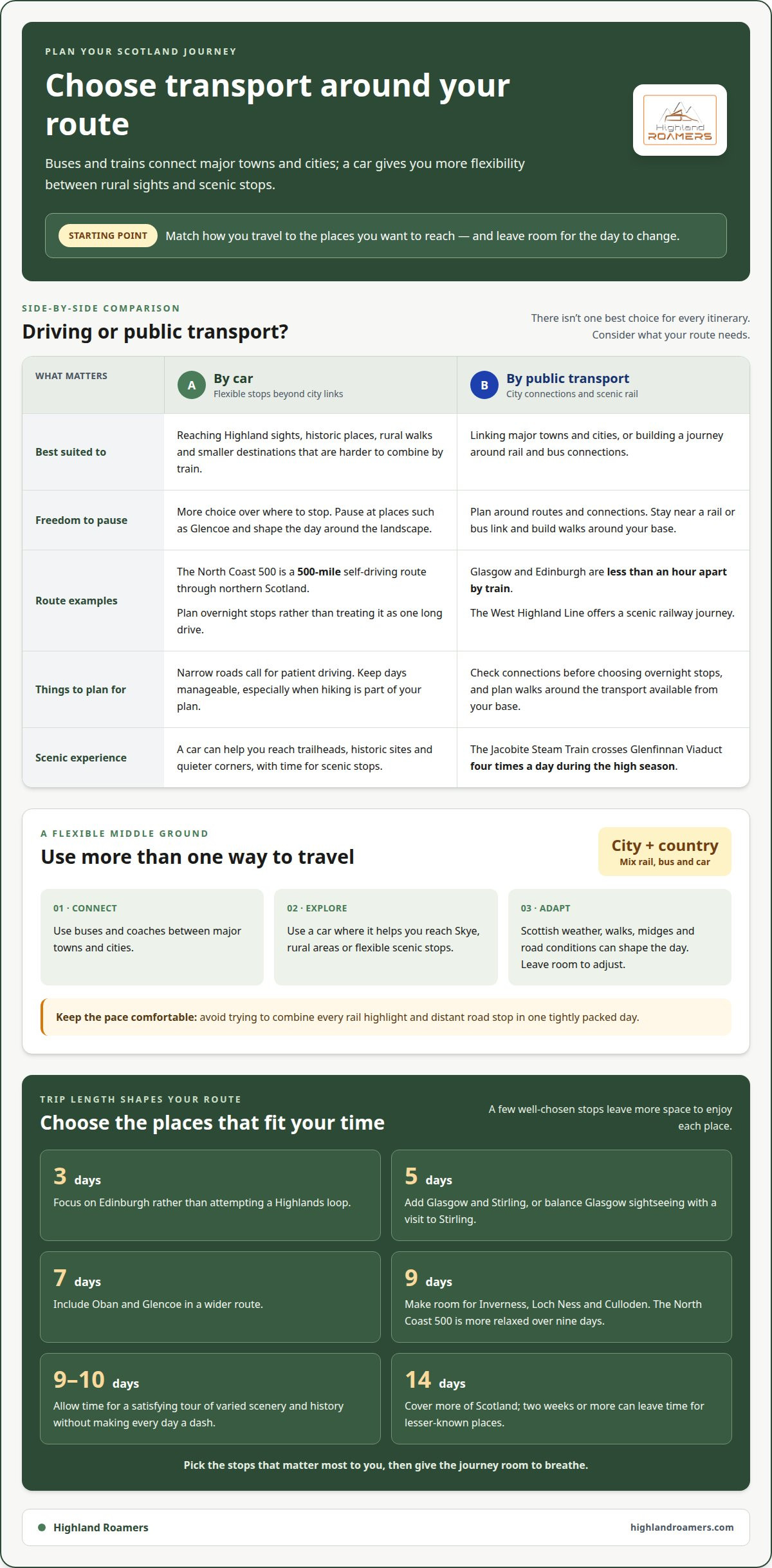
Choosing between driving and public transport
Choose transport around your route: buses and coaches connect Scotland’s major towns and cities, while driving gives you more freedom between rural sights. For Scottish weather, hiking, midges and road conditions, plan flexible days, suitable clothing and regular breaks.
-
Compare car rental with public transport
Choose public transport for city links and a car for flexible stops beyond the main centres. Buses and coaches connect Scotland’s major towns and cities, making them useful for routes between Glasgow, Edinburgh and Stirling. A car can suit a road trip with stops or changing plans. Avoid hiring one for days spent entirely in a city, when parking may add hassle.
-
Plan driving times and route stops
Map each driving day around the route, not just the destination. Edinburgh to Inverness takes an estimated three to five hours by car, depending on the route; the drive to the Isle of Skye is estimated at three hours and 45 minutes. A Glenfinnan and Glencoe day is estimated at three and a half hours’ driving, including ferry time. Add breaks and scenic stops before setting your overnight destination.
- Prepare for changing conditions before setting out from Glasgow or Stirling. Scottish weather can affect how comfortable a walk feels, so choose hiking plans that suit the day and carry clothing for outdoor conditions. Midges can be a nuisance outdoors; consider how they may affect stops and activities. Leave flexibility in your itinerary instead of relying on a tightly timed chain of walks and drives.
- Make road conditions part of your daily planning. On unfamiliar roads, allow time to drive at a comfortable pace, pause safely and adjust your route if conditions change. If you want to explore Highland culture and history, balance driving days with time in towns instead of adding a long hike after a lengthy journey. That keeps the road trip focused on the sights, not the clock.
- If a flexible road trip fits your plans, consider campervan rental for exploring Scotland as one way to travel between destinations at your own pace.
Highland Roamers
Highland Roamers offers campervan rental for travellers who want to plan a Scottish trip around their own route and pace. Once you’ve chosen where to go, consider which equipment suits your plans. Adventure accessories can support outdoor activities, while a Bedding Pack offers a practical option for overnight comfort. Paddleboard Hire may suit an itinerary that includes time on the water. Choose extras that fit your plans, whether you want to explore landscapes, spend time outdoors or make room for quieter stops. To talk through your Scotland travel plans, contact Highland Roamers.
Shape a trip that feels like yours
Before committing to a route, decide how you want your days to feel. Perhaps you’d rather pause often for outdoor activities or keep moving towards a particular landscape. Let that preference guide your overnight stops, and leave space to change pace along the way. The best way to explore Scotland is to give yourself time to enjoy the journey, not just reach the next destination.
Highland Roamers’ team brings local knowledge of Scottish destinations to the planning conversation. If you’re ready to turn your ideas into a campervan trip, start by sharing the kind of experience you have in mind. Plan your Scotland trip with Highland Roamers, then get ready to roam at your own pace.
Frequently Asked Questions
How many days do you need to see the best of Scotland?
Allow around nine to ten days for a varied trip, then tailor the route to your priorities. If you’re keen on islands, leave time for ferry connections and overnight stays rather than treating each island as a quick detour. Travellers with less time can focus on one area, while a longer break gives you more scope to pause between destinations and explore at an unhurried pace.
What is the best way to get around Scotland: rental car, train, bus, or tours?
Choose transport according to the places you want to visit and how much flexibility you need. Trains and buses work well between towns, while a rental car suits plans involving several rural stops or outdoor activities. A guided tour can simplify a day focused on particular sights. For a mixed trip, combine rail for city connections with driving where you want to set your own pace.
How many days do you need to explore Scotland’s main highlights?
Plan for roughly nine to ten days if you want a broad mix of scenery, cities and history. Make a shortlist first: choosing between island time, Highland walks and urban visits will shape your route more than adding every famous sight. Keep arrival and departure days light, too. That leaves more of your holiday for exploring instead of fitting full sightseeing plans around travel connections.
What are the best Scotland itineraries for 7, 10, or 14 days?
For seven days, link a small number of destinations and avoid crossing the country repeatedly. With ten days, you can add time for an island or a Highland base. A fortnight gives you room to explore lesser-known places and build in slower days. For any trip length, choose overnight stops before day trips and group nearby sights together to limit backtracking.
When is the best time to visit Scotland for weather, crowds, and prices?
Summer is recommended for generally better weather, but your ideal season depends on the experience you want. Daylight, weather and outdoor activities change through the year, so match your route to seasonal differences. Crowds and accommodation prices can also vary with dates, local events and holiday periods. If your dates are flexible, compare different weeks before settling on overnight stops and activities.
Is driving in Scotland difficult, and what are the rules for single-track roads and parking?
Driving is manageable if you plan carefully, stay alert to changing conditions and allow time for narrow roads. On a single-track road, use passing places to let traffic pass; don’t stop in one for a scenic break. For parking, follow local signs and overnight parking rules, and use suitable designated spaces. Plan walks and stops around safe places to leave your vehicle.